Total Pageviews

Showing posts sorted by relevance for query hermes media. Sort by date Show all posts

Thursday, 27 January 2022

Liberating the Stories Behind the Characters and the Typewriters in ‘The French Dispatch of the Liberty, Kansas Evening Sun’

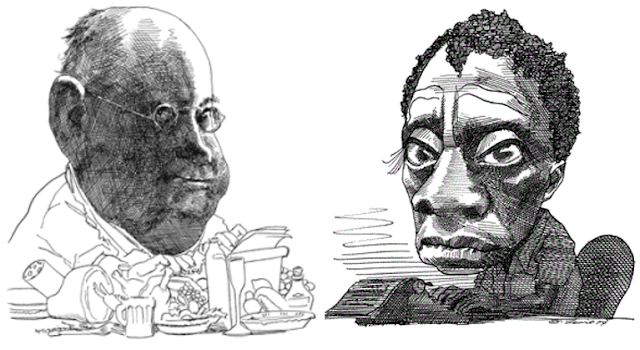
The publisher-editor of The French Dispatch of the Liberty, Kansas Evening Sun was orginally to be called Leibling, after Abbott Joseph Liebling. It was changed to Arthur Howitzer Jr, but the back strory of how Howitzer came to be in France remained Liebling's.

It had been a long, agonising 10 weeks. Yesterday we were finally able to go to a movie theatre and see Wes Anderson’s latest quirky offering, The French Dispatch of the Liberty, Kansas Evening Sun. It is tout simplement magnifique, as they might say in Ennui-sur-Blasé, which, as it turns out, is anything but bore-dering on the jaded. After all, it's “the Paris of Jacques Tati” (actually, it's Angoulême) and the opening scene is a homage to the one in Tati's Mon Oncle, one of my all-time favourite films. Any movie featuring so many machines à écrire is going to be absolutely brilliant anyway. What's more, given it is Anderson’s “love letter to journalists”, it was a top-of-the-wozza must-see.


Ten weeks ago we were alerted to the existence of this new Anderson film, which had been released in the United States on October 22. A friend had picked up and dropped off one of those wonderful mock 20-page copies of The French Dispatch magazine, illustrated
 by Spanish artist Javi Aznarez, in this case 149 ᵉ Série, N° 12, at “200 Old Francs”. Our friend found it at a cinema complex and, like us a subscriber to The New Yorker, she recognised the cover style straight away. Seeing a typewriter advert on the back cover, Penny knew it would be of great interest in this household. She wasn't wrong. Our sense of anticipation thus heightened to the max, we waited impatiently for a chance to see The French Dispatch of the Liberty, Kansas Evening Sun. And yesterday it came. Well worth the wait!

The back cover of The French Dispatch magazine, right,
and the Hermes Baby poster upon which it was based, left.

An illustration of A.J. Liebling by Javi Aznarez in The French Dispatch magazine.

Anjelica Huston’s voiceover at the beginning of the film explains that the publisher-editor of The French Dispatch, Arthur Howitzer Jr (played by Bill Murray) had, in his youth, convinced his father (proprietor of the Liberty Kansas Evening Sun) to finance a series of travelogue columns from France to be published in the “Sunday Picnic” section of the Kansas newspaper. As soon as I heard Huston’s words, I recognised them as essentially A.J. Liebling’s story. In 1926, Liebling's father, wealthy New York furrier Joe Liebling, asked his son if he would like to suspend his budding career as a journalist to study in Paris for a year. Liebling, fearing his father might change his mind, concocted a yarn that he was thinking of marrying a woman 10 years his senior, a woman “being kept by a cotton broker from Memphis, Tennessee”. Joe senior promptly sent a letter of credit for $2000 and a reservation on the Caronia. Joe Jr sailed to Europe and studied French medieval literature at the Sorbonne in Paris, all the while absorbing French life and food. The experience inspired a lifelong love for France and the French. 

  That's a Japy on Bill Murray's desk, by the way, masquerading as an "Andretti Ribbon-Mate".

In An Editor’s Burial (Howitzer dies at both the beginning and end of the movie) - Journals and Journalism From The New Yorker and Other Magazines: Inspirations for The French Dispatch, an American Empirical Picture by Wes Anderson edited by David Brendel and published by Pushkin Press, Anderson tells The New Yorker’s articles editor Susan Morrison “Originally, we were calling the editor character Liebling, not Howitzer, because the face I always pictured was A.J. Liebling’s. We tried to make Bill Murray sort of look like him, I think. Remember, he says he tricked his father into paying for his early sojourn in Paris by telling him he was thinking of marrying a good woman who was 10 years older than he, although ‘Mother might think she is a bit fast’ … ” The Anderson-Morrison interview appeared in The New Yorker last September 5, under the headline, "How Wes Anderson Turned The New Yorker into The French Dispatch".

Illustration by Toma Vagner

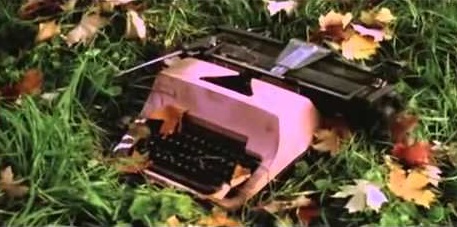
For all that, it's a little odd that the Roebuck Wright character played by Jeffrey Wright (above) is “a food journalist based on an amalgamation of James Baldwin and A. J. Liebling.” It's a memorable part, played extremely well by Wright. But Baldwin and Liebling? Seriously? (By the way, Wright and Bill Murray were also together in Broken Flowers, which featured a pink Olympia.)

The most discordant part of the movie, from the point of view of typewriter use (and there’s a lot of it), involves poor old (looking) Frances McDormand as Lucinda Krementz, a journalist profiling the French student revolutionaries of 1968 (in real life Mavis Gallant). The machine the props people have given Frances to use to type in bed (with Timothée Chalamet as Zeffirelli, a student revolutionary) is one of those awful plastic versions of the Hermes Baby, for goodness sake! I’ve never tried to type on one of the plastic models while sitting up in bed, but the sound of a plastic portable typewriter is, in itself, sufficiently grating to put one off the idea. (Frances is later seen typing her report on a red plastic Hermes Baby.)

Below, the real Mavis Gallant using a metal Smith-Corona.
The portable typewriter on Bill Murray's editor's desk is a mock-up of a Japy, masquerading as an Andretti Ribbon-Mate, a product of Ateliers Andretti and Brothers. And why not? This model is also known by a vast array of different brand names, and is part of what Georg Sommeregger insists should be known as the “Euro Portable Clan”. Here we see Jeffrey Wright starting to type Horiwitz's obituary (the corpse is stretched out on the editor's desk), and below that different sizes of the mock-ups - the smaller versions using bottle tops as platen knobs:
Here are some real-life variations:
There is also what looks like a Hermes Media/3000 in the editorial office:
And others:
Please go see this movie. It's totally:

Thursday, 16 December 2021

Adventures and Admissions of a Typewriter Addict


It was an eventful 24 hours, typewriter-wise and otherwise. As if I didn’t have enough typewriter work on my plate, in the late afternoon one Thursday last month my friend Geoffrey Borny called to tell me a “Burridge and Warren” typewriter was for sale in an auction closing in a hour or two. Was I interested? At first I thought he said “Burroughs”, and of course my ears pricked up. After all, that’s one typewriter I’ve never owned nor used. So I went online to check the listings, and found that what was for sale was a “Burridge and Warren Olivetti Lettera 22” – Burridge and Warren being the West Australia Olivetti distributors back in the day. But to my delight I saw that four other typewriters were coming up in auctions at about the same time: A 1952 Halda portable (the listing claimed 1947, four years before Halda started making its portable) packaged with a Brother Deluxe 760TR; an all-white 1975 Litton Industries Adler Tippa (before that awful design change); and a 1968 Brother De Luxe JP-1 second variation.


It must be at least a decade since I acquired five typewriters in one night, not since my bipolar disorder still had an irrational grip on me and I was spending money like a man with no alms. And I watched the last few minutes of each auction with a twinge of that intense excitement I’d once experienced when bidding for typewriters on eBay (thank goodness it’s a very long time since I gave up that habit!). I won all four auctions, five typewriters in all, for one-third of what I’d estimated I might have to pay – or, should I say, was prepared to pay. So I went to bed that night feeling quite elated.


All this was going on at a time when my wife Harriet and I were preparing to celebrate her birthday and our wedding anniversary a few days early. Harriet was due for another chemotherapy session on the actual dates of those events, so we had decided to head out of town and have a slap-up lunch at an award-winning restaurant called Grazings at Gundaroo. That in itself was a bit of an adventure. The rain bucketed down (yes, this is November we’re talking about, a very damp late spring) and the roads outside Canberra were more potholes than tarmacdam. But we got there, the meal was fantastic, and we got back via Gunning, where we stopped to see what antiques shops were open. One was, but the stores where I’d scored good typewriters in the past (one of them owned by The Great Gatsby actor Max Cullen) were not.


The next day, a Saturday, we decided to visit a few more local antique and bric-a-brac shops. There were, as always, plenty of typewriters to look at in Chris Lund’s Down Memory Lane on Geelong Street, but all a little overpriced in my book (with the possible exception of a Brother, which seemed determined to stay in shift lock). After tick-tacking with fellow Typospherian Jasper Lindell about the Brother, we went to Dirty Jane’s. Seven months ago, it had a few typewriters, one of which had tempted me. But on this occasion it only had one for sale, a seriously battered and rusted up Underwood, for which the seller wanted $285. I might have been tempted at $2.85, especially after testing to see if anything on it moved. Nothing did.


A day or so later we were notified that by going to Dirty Jane’s when we did we were “casual contacts” with someone who was there at the same time as us and who had Covid-19, and therefore we had to get tested and to self-isolate for a few days. That wasn’t so bad, as the weather was loathsome. As well, Jasper dropped by with a Hermes 2000 which had been dropped and seriously damaged. Someone had given it to Jasper, but it was way beyond repair, so he offered it up as a spare parts machine. The damage to the carriage was massive, with the escapement wheel completely twisted out of place. At least I was able to tidy up a Hammond 12 for him – he’d found the machine abandoned in a shed in a pool of water.


Dulling the sense of disappointment with all this was the knowledge that Geoffrey Borny was picking up the five typewriters I’d won at auction on the Thursday night and dropping them off at our place early the next week. At first glance they all looked to be in fairly good shape, and I was thrilled to receive them. On closer inspection, however, I found that NONE of them worked. And whoever had put them up for auction would have known damn well they didn’t work. Fortunately, the Halda came with its original spools, but because of the rods were out of line the spools didn’t turn. The Brother 760TR was completely jammed up – the machine had evidently been drenched in WD40 and the escapement wheel was locked as solid as a rock. The Tippa’s carriage, as I mentioned in an early post, wouldn’t move because its ill-fitting casing was blocking it. The Lettera 22, clogged up to the gills with eraser rubbings, also (naturally) had carriage problems, and the carriage lever on the Brother JP-1 wasn’t working.


The only satisfaction I got from this crooked transaction is that all five machines now work fine. But three out of five with carriage issues (not even counting the Hermes 2000) just continued my year of carriage catastrophes. It’s almost unbelievable the run of outs I’ve had in 2021 with damaged carriages – and I date the curse back to this time last year, when I was the wrangler for a typing test during The Amazing Race Australia TV program at the Museum of Australian Democracy (Old Parliament House). That was the day I heard, for the first time in my life I’m sure, the dreadful sound of someone using brute force to push the carriage to the left without using the carriage release lever. I involuntarily let out such a load groan that filming stopped and I was called in to show the young female typist how to move the carriage.


I’ve been using typewriters for 64 years, and was in the company of many others using typewriters for more than a third of that time, and yet I cannot recall ever once before hearing the awful sound of a carriage being pushed without the dog stop being released – and I hope never to hear it again. But, as I say, that incident marked the beginning of a full year of carriage nightmares. First there was an earlier Lettera 22, the carriage of which just wouldn’t move no matter what we tried. Then came a Hermes Media 3 in a shocking state, showing all the signs of a life of neglect and misuse. Eventually, after taking the carriage off completely, we discovered that a connecting rod underneath it had been smashed off – a screw was still in place where it had been attached to the carriage mechanism, but there was no sign of the broken rod. Brute force had clearly been used once again. So getting three machines of my own with carriage problems just put a cap on a forgettable year.


All of this was going on as I was in the process of completing work on servicing eight typewriters belonging to a local trader, including two of the later Adler Tippas, two Brothers (an M-1500 and a really nice Lemair Deluxe 800T) and an Olivetti DL. Mostly it was ribbon vibrator trouble (such as on this little blue Imperial 200). At least the lady paying for my services will be putting machines on the market that work, and work well. Outside of that job lot, I had a Facit TP1 which mysteriously started skipping, as well as an old Underwood three-bank with the same bad habit. There are two Remington Noiseless portables that still need their mainsprings resprung. The list of difficult tasks has just seemed never-ending this year. It’s such a relief to get a straight-forward assignment.

Oh, Brother!

The effort I’ve put into fixing typewriters has been a stark reminder of how far I’ve come in terms of learning what makes a typewriter tick these past 20 years. When I started collecting them, there was one typewriter mechanic left in Canberra. And he wasn’t a very happy one. I was content to pay what money he charged for the repair work he did for me, but our arrangement began to sour the day he told me he couldn’t fix a Royal portable because “the pawl was broken”. Not knowing what a pawl was, or what its function was in a typewriter, I had to accept his word for it and walk away disappointed. (I later learned the unfortunate man had had a stroke and couldn’t manage the work any longer. Not that he admitted any such thing to me.) But that setback fuelled a determination to find out how to fix machines myself (I was never what might be termed mechanically minded). The next several years I liked to call my self-funded apprenticeship as a typewriter mechanic – mostly gathering Nakajimas and Silver Seikos by the dozen and taking them apart. As for carriages, damned carriages, one of the more critical lessons came from digging into the guts of two Smith-Corona portables, as research for an ETCetera article - an undertaking for which I was rewarded with broken ribs.


I am not, of course, a qualified typewriter mechanic, and would never claim to be one. But I do now have a very precise understanding of what makes typewriters work and what makes them stop working. And a very fair idea of what to do when they break down. It’s getting me by, and for the time being, that’s all I really need in order to stay relatively sane.