Total Pageviews
Saturday, 9 June 2012
Fans With Typewriters: One of them a Trailblazing Woman
Fans with Typewriters is what they used to be called: sportswriters
who had a passion for their job and a certain flair with a portable typewriter.
Most of them were men. But there were gallant, pioneering women
sportswriters, too, such as Faye Loyd.
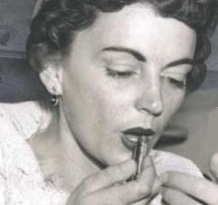
Loyd, from Gilmer, West Virginia, wrote sports for United Press
in 1954, She got a lot of nationwide publicity for doing so, and not all of it was positive. And, of course, only some of it was about the quality of her work. Naturally, UP photographers of the day delighted in snapping pictures
of Loyd fixing her lipstick in the pressbox. The implication was obvious: she
had no right being there. Fancy looking into a hand mirror when football was being played!
Charley Loftus, director of
sports information at Yale University, was one of those who agreed with Loyd's critics. Loftus barred Loyd
from the pressbox for the Army football match of 1954. Loyd had to cover the match from a seat high in the
stands, handing her copy to a runner who carried it upstairs to a telegrapher.
Yale’s stand irked women across America, but the next year Loyd
packed in her job to get married to a Time-Life journalist.
Here are some other famous American sportswriters with
their typewriters, the first four photographed at the 1948 Army-Navy match.
The New York Daily Mirror's Gus Steiger
The New York World Telegram’s Larry Robinson
The New York Journal American’s Frank Graham
Scripps-Howard
columnist Joe Williams
Chester L. “Chet” Smith
Garner W. “Spec” Taylor
Shirley Povich with the sportswriter’s classic
accouterments: typewriter, cigarette and fedora.
Wilfred Charles “Bill” Heinz with his 1932 Remington typewriter.
He wrote for the New York Sun and was called “the Prometheus of modern American
sportswriting." "At his best," Frank Graham once said of Heinz,
"he is better than any of us." Heinz helped write the book M*A*S*H.
Peter Finney
Furman Bisher
John Lake
Hunter S.Thompson
Sportswriters worked in similar conditions in Germany. Here is a
1933 view of the pressbox at Berlin’s Automobil-Verkehrs-und Übungsstraße (AVUS) motor racing circuit. One of the
correspondents is using an Adler typewriter.
A more unusual setting for a sportswriter to be working in is this one - the photograph was taken in 1946 as the fan with typewriter types up the day's events at a horse race
over the Ober See, a frozen lake in Arosa, Switzerland.
Friday, 8 June 2012
Australian Writers and Their Typewriters
I didn’t know the Franklin typewriter had been sold in Australia
until I chanced upon Roger Osborne’s blog, Tom Collins and Company, which is in
large part devoted to the Australian writer Joseph Furphy (who wrote under the
pseudonym Tom Collins) and Furphy’s works. Osborne has three posts about Furphy's Franklin.
Furphy (Irish: Seosamh Ó Foirbhilhe) was born on Yering Station,
Victoria, on September 26, 1843. He is widely regarded as the "Father of
the Australian novel".
Osborne explains that in 1897 The Bulletin’s literary editor, A. G. Stephens, advised Furphy to
have the handwritten manuscript of Furphy’s classic, Such is Life, typed. “Furphy bought himself a New Franklin
typewriter and did the job himself [the New Franklin first appeared on the US
market in 1896].
“When Furphy moved to Perth late in life, the typewriter he used
to prepare Such is Life for
publication came with him. It’s now in the care of Tom Collins House, the
headquarters of the Fellowship of Australian Writers (Western Australia).”
Such Is Life is a fictional
account of the life of rural dwellers, including bullock drivers, squatters and
itinerant travellers, in southern New South Wales and Victoria during the
1880s. It was published in 1903.
In 1905, Furphy moved to Western Australia, where he built a
house at Swanbourne, now the headquarters of the West Australian branch of the
Fellowship of Australian Writers. He died in Claremont on September 13,
1912, His biography was written by Miles Franklin (Joseph Furphy: The Legend of a Man and His Book, 1944), whose
Corona 3 typewriter I now own.
The Australian slang word furphy, meaning a "tall story”,
originated not from Furphy’s writings but with water carts produced by J.
Furphy & Sons, a company owned by Joseph's brother John. But Such Is Life contains possibly the first
written incidence of the Australian and New Zealand idiom "ropeable".
Evadne Price, seen here with her Remington portable
typewriter, was a playwright, novelist, screen writer, children's author,
actress and astrologer who wrote mostly under the pseudonym Helen Zenna Smith.
She was born at sea off New South Wales in 1901.
She became famous for her many romance novels, most of which
were serialised in national newspapers, as well as her children's books
featuring the popular character Jane Turpin. Her semi-biographical novel Not So Quiet: Stepdaughters of War was a
feminist riposte to All Quiet on the
Western Front. She died in Sydney on April 27, 1985, aged 84.
Poet, short story writer, essayist and literary editor Douglas
Stewart is seen here in 1973 at his St Ives, Sydney, home. Stewart was born at
Eltham, Taranaki, New Zealand, on May 6, 1913, to an Australian-born lawyer
father. For 20 years he was one of A.G. Stephen’s successors as literary
editor of The Bulletin, as well as a
publishing editor with Angus & Robertson. Literary critic Geoffrey Serle
called Stewart "the greatest all-rounder of modern Australian
literature" He died in Sydney on February 14, 1985, aged 71.
This is the Olivetti Lettera 22 portable typewriter used by Ray
Lawler to write the great Australian play Summer
of the Seventeenth Doll (the doll refers to a Kewpie doll).
Raymond Evenor
Lawler was born in Footscray, Melbourne, on May 23, 1921. He is an influential
Australian actor, dramatist and producer. Summer
of the Seventeenth Doll had its premiere in Melbourne in 1955 and changed
the direction of Australian drama.
Virginia Frances Trioli, seen here with her Olivetti Lexikon
typewriter in 2005. is an Australian journalist and author. She was born in
Bendigo, Victoria, on August 16, 1964. She undertook postgraduate studies in
New York from 1993–94 while working as a reporter for Melbourne’s The Age and later, like Stephens and
Stewart before her, worked for The
Bulletin. In 2001 she won a Walkley Award for her interview with former
defence minister Peter Reith over the "Children Overboard Affair".
She is the author of the book Generation
F: Sex, Power and the Young Feminist published in 1996 as a riposte to
Helen Garner's The First Stone.
Gordon A. Rule, seen here at his home in Warrnambool, Victoria,
was the creator of the children’s book character Humphrey B. Bear. Rule was born
in Lechworth, England, in January 1927 and came to Australia after serving in
World War II. Then he returned to England, where he met his wife, Joan, before
the couple moved back to Australia as sponsored immigrants in 1958, living in
Brisbane and then Adelaide. It was in Adelaide that he developed the children's
book idea after Humphrey hit the television airwaves in 1965. His children Greg
and Annette recalled their father tapping away on his typewriter at night after
working as a salesman during the day.
Art critic, historian and writer Robert Hughes, author of the
1987 international best seller The Fatal
Shore, is seen here in 1979 with his Olivetti Lettera 32 portable typewriter while working on a
script in the store which houses the National Collection of Art in Canberra.
Robert Studley Forrest Hughes was born in Sydney on July 28 1938. He has
resided in New York since 1970.
Journalist and author Nancy Nugent Dexter is seen here in
1967. Born in Coburg, Melbourne, on February 16, 1923, she was educated at
Wagga Wagga High School and started in newspapers in 1941 as a copy-typist for
the Wagga Wagga Daily Advertiser, and
then moved to Sydney to monitor radio news for the Daily Telegraph. In 1946 she became a copy-typist at the Melbourne Herald, and in 1950 a cadet on its social
pages.
As the women’s movement gained momentum in the 1970s, Dexter documented for
The Age in Melbourne its agendas and
debates with “guts and substance” (so recalled Beatrice Faust, a founder of the
Women’s Electoral Lobby) while also normalising discussion of controversial
subjects: “a drip wearing away a stone” was Dexter’s favoured metaphor. She
died suddenly on April 21, 1983, aged 60, while on assignment as The Age’s travel editor. at Jaipur,
India.
Well-known Welsh-born
Australian motoring writer Pedr Davis with his Olympia Traveller de Luxe portable typewriter. Davis befriended
Stirling Moss when Moss was a tyro and was chauffeured at high speed by
five-time World Formula One Champion, Juan Manuel Fangio. He tested prototype cars in East Africa against a
background of Mau Mau terrorism and in a 1962 interview, motorcycle-maker
Soichiro Honda told Davis of his plans to make “the best cars in the world”. Davis
was one of the few journalists allowed to drive the first real car, the 1885
Benz, and the first to drive the car powered by Ralph Sarich's amazing orbital engine.Marty Monkeys Around with Typewriters
ETCetera, the journal of the Early Typewriter Collectors' Association, has been lightened yet again in its latest edition, with another amusing letter from Martin A.Rice Jr, director and curator of the Johnstown Typewriter Conservatory in Pennsylvania.
Martin expressed his delight that in one of Peter Weil's Ephemera spreads, mention is made of a Reverend McConnell "coming to his senses" in exchanging a Blickensderfer typewriter for an "obviously superior" Oliver - "the flagship machine of conservatory".
Yes, the Oliver is certainly the preferred machine for many, even for Monkees.
But I think Martin might be stretching it a bit in suggesting the Oliver is unique in "improving the lot of the differently able" - a reference to a photo in the previous issue of ETCetera, in which Carl Hermann Unthan, the famous German violinist who was born with no arms, is shown typing on an Oliver with his toes.
The Royal flatbed could surely make a similar claim on behalf of Miss Kittie M.Smith, of Chicago:
Kitty, like Unthan, had managed overcame her handicap (which, tragically, was not a birth defect) by becoming adept at many things.
Also, Getty has an image of what it calls "an apparently armless man" typing on what looks to be a Smith Premier, but dating it from 1920:
As well, it appears that some clever lady (at least I think it's a lady) can type with her toes on a Hermes 3000 - while lying down (presumably):
In a previous letter to ETCetera, which appeared in the June edition last year, Martin drew the attention of readers to the opening scene of the 1945 Hollywood classic I Remember Mama, in which an Oliver is used. Sadly, while there are many clips from this movie on YouTube, none appear to feature the Oliver (If such a thing as a clip had existed, I was hoping to be able to load it here).
As far as I can see, the same (that is, a lack of a suitable clip) applies to last year's Oscar-winning best picture, The King's Speech, in which Australian actor Geoffrey Rush, playing compatriot Lionel Logue, uses an Oliver. I can't say how accurate this is, and whether Logue indeed used an Oliver.
But while on the subject of British royals, some may have noted that England's Queen has been celebrating her Diamond Jubilee, in this case 60 years as a monarch. Did you know you could mark the occasion by typing her face, as it was when she was crowned?
But back to Olivers ... and Monkees, not all of whom, it seems, prefer Olivers, but in some cases Remingtons, Yosts and ... yes ... Royals!
Martin expressed his delight that in one of Peter Weil's Ephemera spreads, mention is made of a Reverend McConnell "coming to his senses" in exchanging a Blickensderfer typewriter for an "obviously superior" Oliver - "the flagship machine of conservatory".
Yes, the Oliver is certainly the preferred machine for many, even for Monkees.
But I think Martin might be stretching it a bit in suggesting the Oliver is unique in "improving the lot of the differently able" - a reference to a photo in the previous issue of ETCetera, in which Carl Hermann Unthan, the famous German violinist who was born with no arms, is shown typing on an Oliver with his toes.
The Royal flatbed could surely make a similar claim on behalf of Miss Kittie M.Smith, of Chicago:
Also, Getty has an image of what it calls "an apparently armless man" typing on what looks to be a Smith Premier, but dating it from 1920:
As well, it appears that some clever lady (at least I think it's a lady) can type with her toes on a Hermes 3000 - while lying down (presumably):
In a previous letter to ETCetera, which appeared in the June edition last year, Martin drew the attention of readers to the opening scene of the 1945 Hollywood classic I Remember Mama, in which an Oliver is used. Sadly, while there are many clips from this movie on YouTube, none appear to feature the Oliver (If such a thing as a clip had existed, I was hoping to be able to load it here).
As far as I can see, the same (that is, a lack of a suitable clip) applies to last year's Oscar-winning best picture, The King's Speech, in which Australian actor Geoffrey Rush, playing compatriot Lionel Logue, uses an Oliver. I can't say how accurate this is, and whether Logue indeed used an Oliver.
But while on the subject of British royals, some may have noted that England's Queen has been celebrating her Diamond Jubilee, in this case 60 years as a monarch. Did you know you could mark the occasion by typing her face, as it was when she was crowned?
Subscribe to:
Posts (Atom)