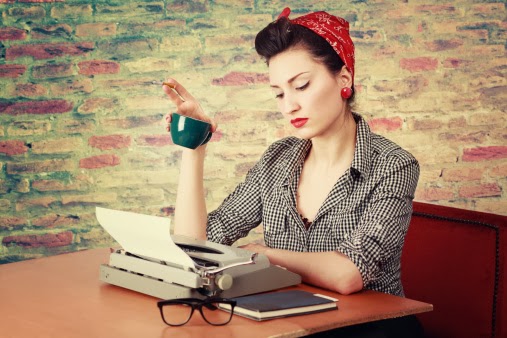
No, not Henry Mill and his "typewriter". This one is from 1836.
300 YEARS SINCE
FIRST 'TYPEWRITER' PATENT
OK, so I'm a few days late with my December Update. My excuse is that I waited until January 7, since today is the 300th anniversary of English engineer Henry Mill's "first typewriter patent".
Mill was on this day in 1714 granted a patent (No 395) by the court of Queen Anne for "an artificial machine or method for the impressing or transcribing of letters, singly or progressively one after the other, as in writing, whereby all writings whatsoever may be engrossed on paper or parchment so neat and exact as not to be distinguished from print ... the impression being deeper and more lasting than any other writing, and not to be erased or counterfeited without manifest discovery."
Apart from these words, nothing exists to suggest Mill (c 1683–1771) actually built such a machine, even as a model.
TYPEWRITER QUIZ QUESTIONS
Charles-Michel de l'Épée
Mill's 1714 patent was one of three typewriter-related questions I heard pop up on TV quiz shows last month. I think it was on Stephen Fry's QI.
On the excellent BBC quiz show Eggheads, a challenging team was offered typewriting as one of three possible answers to the question: "What did the Abbé Charles-Michel de l'Épée introduce to his French school in 1760?" [A bit early for typewriters, I must admit.]. The other options were semaphore and, of course, sign language. De l'Épée's manual alphabet has survived
basically unchanged in France and North America until the present time. Laurent
Clerc was arguably his most famous graduate. Clerc went to the United States
with Thomas Hopkins Gallaudet to found the American School for the Deaf in
Hartford, Connecticut, in 1817. Gallaudet's son, Edward Miner Gallaudet
founded a school for the deaf in 1857 in Washington DC, which in 1864 became
the National Deaf-Mute College. Now called Gallaudet University, it is still the
only liberal arts university for deaf people in the world.
Among authors whose names came up on an Eggheads question last week were typewriter users Paul Auster (Olympia SM9) and Michael Frayne (Olivetti Lettera 22).
In Australia, Millionaire Hot Seat host Eddie McGuire asked a well-known Queensland journalist and writer "Which company made the first commercially successful typewriter?" McGuire called it a "Sholes and Gliddeán". Among the four choices was Underwood, which the contestant, surprisingly, said he'd "never heard of". But he won the money (a six-figure sum) with "Remington". IBM was offered as another option.
TYPEWRITERS IN
DC BASEMENTS?
At her home in Great Falls, Virginia, this week, writer Kristin Clark Taylor posed at her desk
with her mother's Underwood typewriter. The Washington Post article which features this image is headed "US history saved in Washington’s basements". It says, "Kristin Clark Taylor explores
the family memories and historical moments represented in saved trinkets and
clumps of dirt found in the basements of many Washingtonians. Kristin Clark Taylor poses the questions: Are the cherished trinkets,
heirlooms and baubles of a Washingtonian any more interesting than, say, the
baubles of a Bostonian or a Boca Ratonian? Put simply, are our collectibles
simply cooler?" Read Kristin's biog here.
TYPEWRITERS IN THE NEWS
In my days of writing sport and columns, I seldom missed a chance to work a typewriter into the copy. But New Zealand cricket commentator Freddie Wilde drew a very long bow when he managed to link the "1000 monkeys on typewriters" line with a whirlwind world record innings from Corey Anderson, against the West Indies in Queenstown, in his opinion piece, "Monkeys, typewriters and broken records". The connection, apparently, is the idea of a 17-ball century (that is, 17 sixes). Anderson managed it in 36 balls. Below is the picturesque ground he scored it on:
TYPEWRITERS IN LAOS
Friend and former colleague Aaron Hall flew into Laos at the weekend after spending some time with ace young journalist Michael Ruffles in Bangkok. Aaron was quick to send me these images:
Aaron wrote, "Still in use at a regional Laos airport."
Another travelling friend, Peter Crossing, saw these typewriters last month in a museum at the Sunbury Plantation in Barbados:
A FUNKY ATOMIC THANK-YOU
TO FRIENDS OVERSEAS
A huge thank-you to Richard Polt in Cincinnati and to Piotr Trumpiel in London for their cards sent over the Christmas period. Piotr kindly sent a set of six very nice typewriter-themed postcards. I promise I shall return the favour ... one day soon!
TYPEWRITER FRIEND OR FOE?
I received a request from Chinese blogger "Shane-Yeh Gerard" ("machopolitan") asking me to help introduce typewriter fans to his blog, "Typecasting in China". Gerard explained that "blogspot.com
is totally blocked in China, therefore I'm using a special software called VPN
to bypass restrictions. It doesn't always work."
Only nine days earlier, Gerard had called me a "Bad-mouthing, China-smearing son of ... bourgeoisie" over a perfectly innocuous post about Chinese-made typewriters. Umm. Is there is a language problem here?
THE AGE OF CONTEXT
Shel Israel is a writer, consultant and speaker on issues related to social
media and business communications. He is CEO of SI Associates and is based in
the San Francisco Bay Area. He is best known as a
storyteller and writer. He’s author of four books, including Twitterville
published in 2009 and Naked Conversations: How Blogs are Changing the Way
Businesses Talk with Customers. Written with Robert Scoble, Naked Conversations
was listed by Amazon.com as one of the 10 best business books of 2006. Israel
and Scoble have collaborated on a new book, The Age of Context: How it Changes your Work and Life. Israel also
offers commentary on The Social Beat on Forbes.com and has previously
contributed to BusinessWeek, Fast Company, Dow Jones and American Express OPEN
Forum.
ENID BLYTON'S TYPEWRITER
Enid Blyton's Imperial Good Companion portable typewriter and diaries were on display at the Seven Stories centre in
Newcastle in England.
MISS TYPEWRITER, DECEMBER 2013
Other contenders:
Where'd he go?
Not forgetting...
The little ladies who've been doing all the work around here lately.

 Right wall upon entry
 Back right corner
 Left back wall
 Back wall
 Ditto
Ditto Left back wall
 Left back wall corner
 Ditto
Ditto Ditto
Ditto Ditto
Ditto Left front wall
 Computer corner. Computer has USB Underwood set up.
 Ditto
Ditto Right side all
 Ditto
Ditto Right wall


 Front part of right wall
 Front section
 Front of right wall

 New glass-doored cabinet for gold-plated typewriters and Corona animal keyboard. An Oliver is on the bottom for ballast. I think it's the heaviest machine I own.

 Front side left wall
 Ditto
Ditto